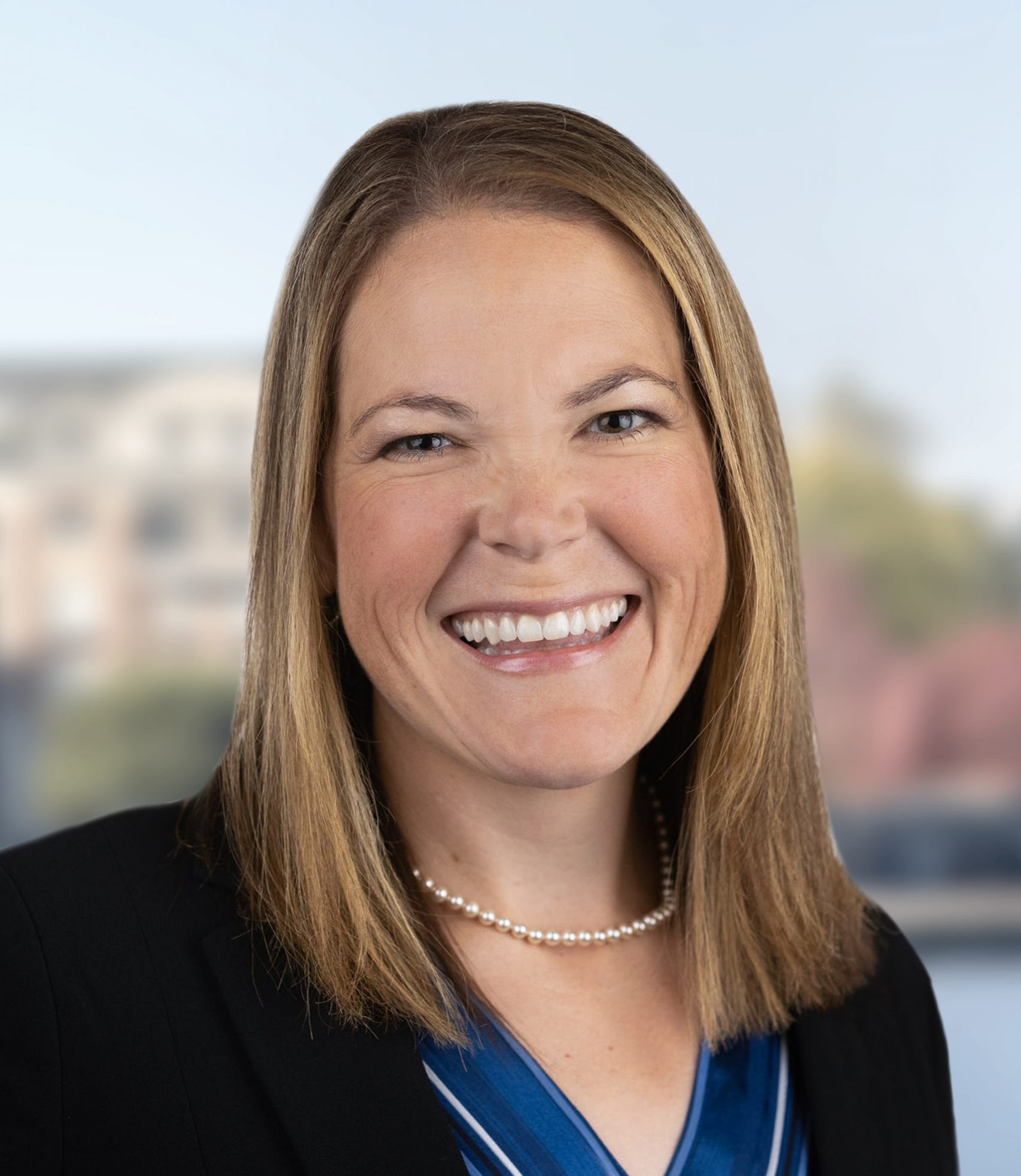

L. Jean Noonan
PartnerBIO
Practice Areas: Credit Reporting, Privacy and Data Security, Federal Trade Commission, Government Oversight and Enforcement and State Enforcement


We have looked at the Federal Trade Commission’s sweeping case against Bronx Honda and its general manager. Was this case part of a concerted effort by the FTC to ferret out illegal credit discrimination by automobile dealerships? I doubt it, but it seems that at least a couple of commissioners on the five-member bipartisan Commission have gotten a taste for such cases, and the future may look grim.
Why do I think this was not a case generated by the FTC staff’s own great investigatory skills? Two reasons: First, the FTC has had almost exclusive jurisdiction over auto dealerships for financing practices since Dodd-Frank removed most dealerships from the jurisdiction of the Consumer Financial Protection Bureau in 2010. Some assumed that the FTC would allocate resources to fill the perceived regulatory gap, but that did not happen. Instead, the FTC continued its long-established practice of focusing an occasional case on dealer advertising concerns.
Second, the FTC’s gracious thanks to the Bronx District Attorney’s Office in its press release strongly suggests this case came to the Commission’s attention through that local law enforcement office. I suspect this case resulted from a one-off complaint to the Bronx DA, perhaps by a dealership whistleblower.
But this may not be the last case we see, and it seems doubtful the FTC will count on “getting lucky” with a complaint to local authorities for its next case. Concurring statements from the FTC’s two Democratic commissioners suggest they are cracking the whip on the FTC staff, and they may want more than just a few additional enforcement actions.
Commissioner Rohit Chopra and Commissioner Rebecca Kelly Slaughter issued statements on the Bronx Honda case on May 27. Both statements make fair points, and, at the same time, both manage to vilify auto dealerships and wholly fair and legal practices.
A major theme of both statements is that the FTC should promptly employ its rulemaking authority to combat abuses by auto dealerships. They conclude that an enforcement strategy, by itself, is insufficient.
Commissioner Chopra has the briefer and somewhat more confusing statement. He correctly notes that reliable transportation is extremely important to Americans and obtaining it often requires auto financing. He also correctly states that uncovering direct evidence of racist intent is rare. Where he veers off the tracks is in stating that disparate impact and machine learning are critical tools to “tackle discriminatory algorithms.” First, no discriminatory algorithms were involved in the Bronx Honda matter. The allegation was that the dealership charged some consumers more specifically because of their race or ethnicity. This is discriminatory treatment, pure and simple, not disparate impact.
Second, fancy artificial intelligence models are not needed to proxy credit applicants’ race and ethnicity. Many articles have been published on exactly how to do this, and the CFPB published the straightforward computer code on its website several years ago. Most undergraduates (and probably many high school students) knowledgeable in computer science can proxy code a consumer credit data set.
Commissioner Chopra notes that one advantage of a rulemaking would be the Commission’s ability to declare discrimination “unfair” outside the credit context. I suppose that is true, but it is enough for me to focus on allegations of credit discrimination for now.
Commissioner Slaughter has a better grasp on the law and auto finance. But she generalizes from the allegations of discrimination and deception by Bronx Honda to declare in her opening sentence that the “automobile-financing market in the United States is profoundly broken.” She argues for “far-reaching structural reform to the automobile-financing and -sales markets.” The first step, she believes, is regulating dealer markup.
Commissioner Slaughter, like many consumer advocates new to the issue, views dealer markups as a wholly unwarranted increase over the indirect creditor’s buy rate, and she advocates banning all dealer markups. “On that score, dealer markup has got to go. And I would like to help.”
Both commissioners make three important mistakes:
Faithful adherence to this Fair Credit Compliance Program protects consumers from illegal discrimination, promotes competition, and protects honest dealerships from unwarranted doubts about their ECOA compliance. Finally, the program contains rigorous and detailed documentation requirements that allow a regulator or a consumer to verify the dealership’s fair pricing.
We also encourage the Commission to avoid taking cheap shots at all auto dealerships. Auto dealerships are often family-owned local businesses that have earned the trust and loyalty of the community, often for generations. Like every business, there are some who engage in sharp practices and even a few, like Bronx Honda, whose conduct is shocking. There are few if any consumer-business relationships where the consumer enjoys a “fundamentally” equal relationship with the business. The need for the FTC is unlikely to dry up.
But markups (a term with negative connotations but probably too entrenched to change) are not “undisclosed kickbacks.” A spread between wholesale and retail rates is a basic component of American enterprise, and it is no more unfair in the auto finance context than in any other. I think we can agree that retailers would like to get the highest price they can, consumers would like to pay the lowest, and we hope to rely on a fair market to reach an optimal outcome. I might cringe if I knew a retailer’s markup on a pair of nice shoes, but no one thinks it is an unfair practice not to tell me.
I suspect that consumers, dealers, and the enforcement agencies agree on important points: Discrimination, like unfairness and deception, is unacceptable and deserves strong sanctions. No person should pay more for credit based on his or her race, ethnicity, sex, or another prohibited basis. No business should profit from lies to consumers and rely on consumers’ failure to catch it cheating. We almost certainly agree on these points.
But some issues are more complicated that these truisms suggest. I believe respect for the legitimate concerns of both consumers and businesses will produce an approach yielding the results we want. Shall we assume good intentions on all sides, faith in the principles of the ECOA and the FTC’s ban on unfair and deceptive practices, and roll up our sleeves?

Hudson Cook, LLP provides articles, webinars and other content on its website from time to time provided both by attorneys with Hudson Cook, LLP, and by other outside authors, for information purposes only. Hudson Cook, LLP does not warrant the accuracy or completeness of the content, and has no duty to correct or update information contained on its website. The views and opinions contained in the content provided on the Hudson Cook, LLP website do not constitute the views and opinion of the firm. Such content does not constitute legal advice from such authors or from Hudson Cook, LLP. For legal advice on a matter, one should seek the advice of counsel.


CounselorLibrary is a collection of online complementary consumer credit compliance and privacy products, created, maintained and supported by the lawyers of Hudson Cook, LLP.
CounselorLibrary products and services are available directly through and from www.CounselorLibrary.com and are not legal advice. Counselorlibrary.com, LLC is an entity affiliated with Hudson Cook, LLP.


7037 Ridge Road, Suite 300
Hanover, Maryland 21076